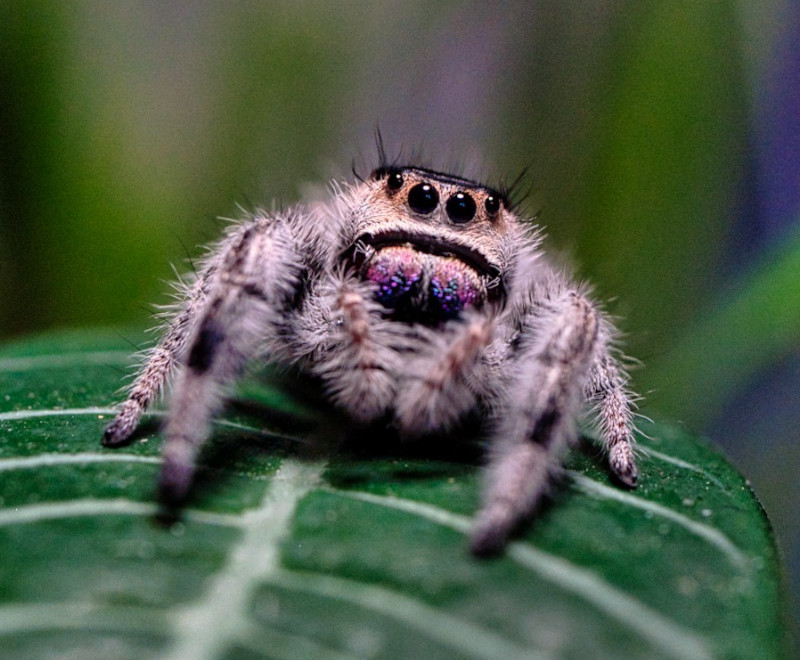
Before we got into tarantulas, our very first spiders were a couple of jumping spiders. Since then we have bred several generations, raising a few hundred jumpers along the way, and every one of them was tracked in AlienKeeper. Our goal was to give them the longest, healthiest life we could in captivity — and we reached results we are proud of. Jumpers rarely live as long in the wild. AlienKeeper was built with jumping spiders in mind, and it can help keepers raise the quality of their care and make the hobby more joyful.
This guide is mostly about Phidippus regius (the royal jumping spider), but the same ideas work for many other jumping spider species.
Small jumpers in captivity eat fruit flies. They start on the small ones (Drosophila melanogaster) and, as they grow, you can switch to larger fruit flies (Drosophila hydei). As they get bigger you can add red runner roaches (Shelfordella lateralis), small dubia roaches, and mealworms — but the food they love most is flies and crickets.
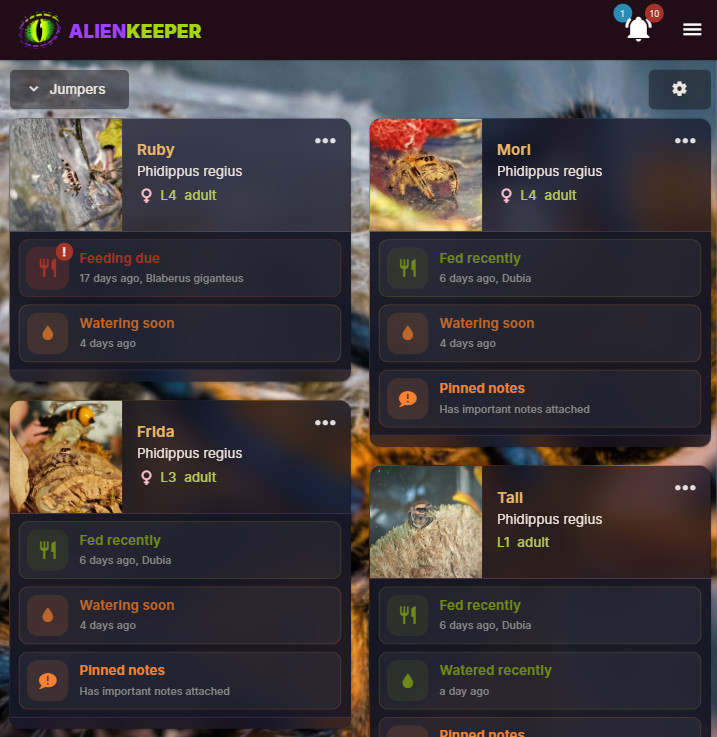
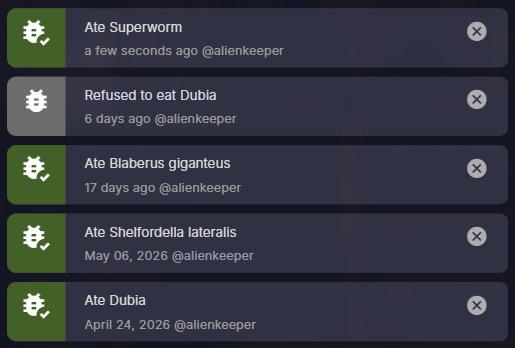
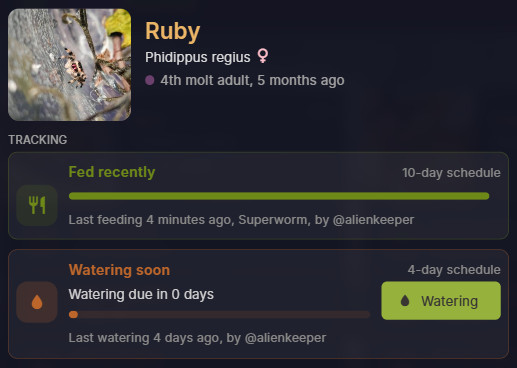
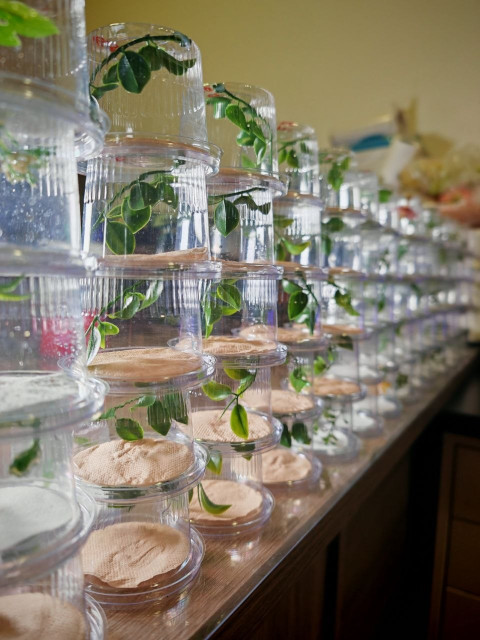
How does the jumping spider feeding tracker help? You just set a feeding interval. If you keep a lot of tiny jumpers, make one group card so you don't have to track every baby on its own. If you only have a few, give each its own card and assign them to a space — we have a "Jumpers" space where we currently keep around 20 of them. In the space settings you add the feeders you use, and the app keeps the schedule for you.
It is important to feed a varied diet. In nature jumping spiders don't eat only mealworms — they almost always catch something new. With small ones it is hard to rotate feeders much, but you can mix fruit flies with micro crickets. As they grow, rotation gets a lot easier.
For adults it is good to have at least 3–4 different feeders, and the more the better. What we feed most are flies, crickets, red runners, the occasional mealworm, very small superworms, and small dubia roaches. Jumpers are resilient and can manage on just a few feeders, but would you want to eat the same thing every single day? As keepers, our job is to get as close to natural conditions as we can.
Keeping tiny baby jumping spiders is the hardest part of the hobby — they are very fragile. The single most important thing to track for them is watering. They can go a while without food, but without water you start losing them, sometimes in as little as 3 days.
For the smallest jumpers we track watering every other day. As they grow into average size, every 3rd day is enough. Our adults drink every 3–4 days, and every single time we offer water, all of them drink — we have yet to see a jumper turn down a drink. Regular watering is one of the main keys to a long, happy life. Do not underestimate it.
Before molting, jumpers stop eating and usually start to web a lot — you'll notice a thicker web, and often they seal it off from every side. This is when our DND (Do Not Disturb) feature helps, so you don't forget to stop feeding a pre-molt jumper. Never leave live prey in the enclosure of a spider in pre-molt. It stresses the spider, can interrupt the molt, and a cricket can even injure the jumper while it is soft. At this stage, just keep offering a little water every few days.
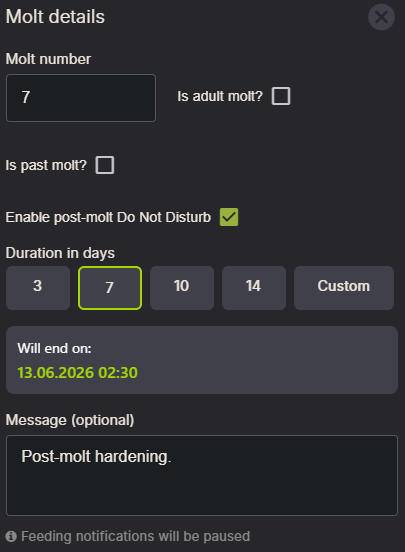
After a molt, jumpers need time for the new exoskeleton to harden. If you track molts with AlienKeeper, it takes one click to set post-molt DND. For small jumpers that's around 3 days; for older ones 5–7 days. Keep offering water every other day while they are fragile. Once DND ends, start feeding again — it's good to begin with easier prey.
After a few months of feedings, molts and watering, the small notes add up into a bigger picture. AlienKeeper turns them into simple charts — how much each jumper eats, which feeders it prefers, and how its molts space out as it grows. It is an easy way to spot what is normal for your animals, and to notice when something changes.
See how much each jumper is eating over time. If feedings start dropping off, that can be an early sign of pre-molt — or a hint you were feeding a bit too often.
Which feeders does this jumper actually take? The chart shows your most offered feeders, so you can keep the diet varied instead of reaching for crickets every single time.
How often is this jumper molting, and how has that stretched as it has grown? Seeing molt intervals on a chart tells you a lot about where each animal is in its life.
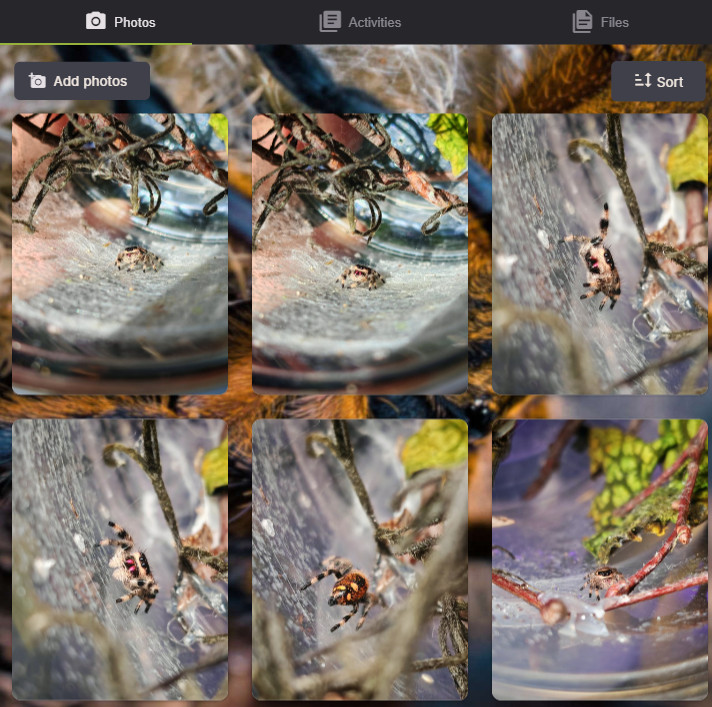
Jumping spiders are possibly the cutest arachnids on the planet, and we love taking photos of them. It mattered to us that those photos didn't just sit in some folder on a hard drive we're too lazy to open. With jumpers there's also the tricky part: over time they start to look very similar, and it gets hard to remember which one is in which photo.
AlienKeeper gives every jumper its own photo timeline. With time it becomes a valuable archive and backup. Watching a tiny baby grow into a big adult, and keeping that memory with you, is one of the most rewarding parts of the hobby — and one of the most valuable features there is. You don't even have to track care to use it; a profile with photos works on its own.
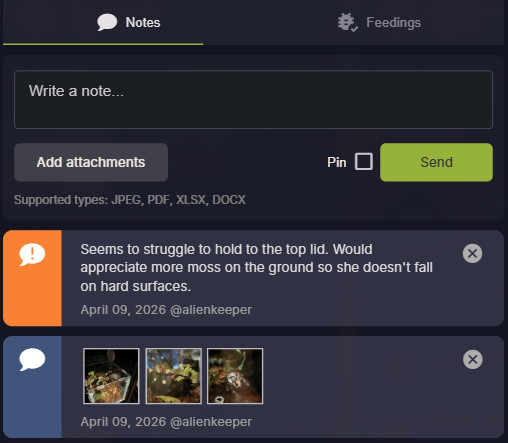
Jumpers have personality, and you start to notice the small stuff — this one always hunts from the lid, that one hid for a day after a rehouse, another took a feeder it usually ignores. Drop those observations into the animal's notes and they stay attached to the jumper they belong to, ready whenever you want to look back.
When something can't wait, turn it into a sticky note. It pins to the top of the jumper's card so it's the first thing you see — a lid that isn't closing right, a leg you want to watch after a molt, a baby you're worried is too thin. It stays there nagging you until you deal with it.
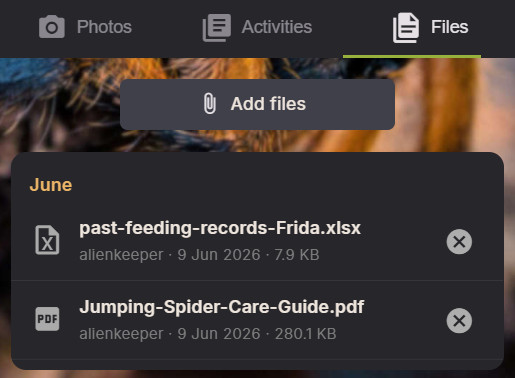
Found a good care guide or a study? Have an old spreadsheet with feeding logs? Don't throw it into a random folder on your hard drive where you'll never find it again. Upload it to your animals in AlienKeeper instead.
Every jumper has its own files tab. Attach anything you want kept with that specific animal, and next time you need it you'll always know exactly where it is.
A jumper might be with you for a year or two, and along the way you build up a whole history — feeding dates, molt records, watering, and a photo timeline from baby to adult. That history deserves a safer home than a single phone. AlienKeeper saves everything online the moment you tap it, so you can open the app on your phone, your partner's phone, or a laptop and see the exact same thing. If a device is ever lost or broken, your records aren't — you just log in somewhere else and carry on. No manual exports, no backups to remember, no folder of screenshots you hope you never have to dig through.
It depends on age. Babies eat every other day and should always have a few live fruit flies around. Average-size jumpers eat twice a week, older juveniles once a week, and adults every 7–10 days. Interval feeding works really well — just set the interval per animal and the jumping spider feeding tracker keeps the schedule. Don't overfeed: overfed jumpers become balloon-shaped, fragile, and tend not to live as long.
Small jumpers eat fruit flies — Drosophila melanogaster first, then larger Drosophila hydei as they grow. Bigger jumpers eat crickets, red runner roaches (Shelfordella lateralis), small dubia roaches, mealworms, and small superworms. Their favorites are flies and crickets. Always use feeders smaller than the spider, and keep the diet varied — in nature they almost always catch something new.
Watering is the most important thing, especially for babies. The smallest jumpers should be offered water every other day; without it you can lose them in as little as 3 days. Average-size jumpers do well every 3rd day, and adults drink every 3–4 days. Just spray a little water on the enclosure wall or near their web — almost every jumper will come out and drink.
A jumper in pre-molt stops eating and webs a lot — you'll see a thicker web, often sealed off on all sides. Turn on DND so it drops out of your feeding queue, remove any live prey, and keep offering a little water nearby every few days. Never leave a live cricket in with a molting jumper.
Give the new exoskeleton time to harden — about 3 days for small jumpers and 5–7 days for older ones. Keep offering water every other day while they are fragile. In AlienKeeper you can set post-molt DND in one click right from the molt screen, then start again with easier prey when it ends.
DND pauses feeding reminders for one animal. Use it when you spot pre-molt signs, during post-molt hardening, or any time a jumper should be left alone. When the DND period ends, it goes back into the care queue automatically.
Yes. If you have many small jumpers, make one group card so you don't have to track every baby separately. If you have only a few, give each its own card and assign them to a space. The tracker sorts every animal by hunger level so the most overdue are always at the top.
Yes. Every jumper gets a profile card with a photo timeline and basic info. If all you want is a place to keep photos and watch your jumpers grow, that works on its own — the tracking features are there whenever you want them.
Yes. The same tools work for tarantulas, other arachnids, reptiles, and insects, so you can keep all your animals in one place.
This jumping spider husbandry guide will keep growing as we add features and learn more from keepers using the app. If you have a care workflow that should be in here, or a feature you'd like to see, the app has a feedback channel and we read everything that comes in.
Care needs differ from one species to the next, and covering those specifics is beyond the scope of this guide — its focus is on how AlienKeeper helps with particular aspects of keeping. It is not a species-specific care sheet and does not contain everything you need to keep an animal successfully. Always research the requirements of your specific species before you start keeping it.